
How to Choose the Right Planter Size for Your Indoor Plants
Walk into any garden centre or browse any homeware store and you'll find planters in an overwhelming range of sizes. Picking the right one isn't just about how it looks on your shelf, pot size directly affects root development, water retention, and whether your plant thrives or slowly declines.
Here's everything you need to know to size your planters correctly, every time.
Why Pot Size Matters More Than You Think
Plants grow according to the space available to their roots. A pot that's too small restricts root development, causing the plant to become root-bound, roots circle the interior, compete for nutrients, and starve the plant of moisture. Conversely, a pot that's too large holds excess soil that retains more water than the roots can absorb, creating waterlogging conditions that rot roots from the inside.
The right size is roughly 2–5 cm larger in diameter than the plant's current root ball. That gives roots room to expand without leaving too much dead, waterlogged soil around them.
General Sizing Guide by Plant Type
Small herbs and seedlings (basil, mint, chives): 8–12 cm diameter. These plants have shallow, compact root systems and don't need deep or wide containers.
Medium herbs and compact houseplants (rosemary, parsley, pothos, small ferns): 12–18 cm diameter. Enough soil volume for steady moisture retention without waterlogging risk.
Large houseplants (peace lilies, spider plants, rubber plants): 20–30 cm diameter. These need significant soil volume to support larger, spreading root systems.
Statement plants (fiddle leaf figs, monstera, palms): 30 cm+ diameter. These are floor plants and need deep, wide containers for both stability and root space.
Understanding Depth vs. Width
Most people only consider width, but depth is equally important for certain plants. Herbs and compact houseplants have shallow roots and do well in wide, relatively shallow planters. Deeper-rooting plants like rosemary and certain edibles need more vertical depth. When choosing between options, look at the plant's natural root structure and growth habit, not just the label on the pot.
Sets of Three: How to Use Graduated Sizes Smartly
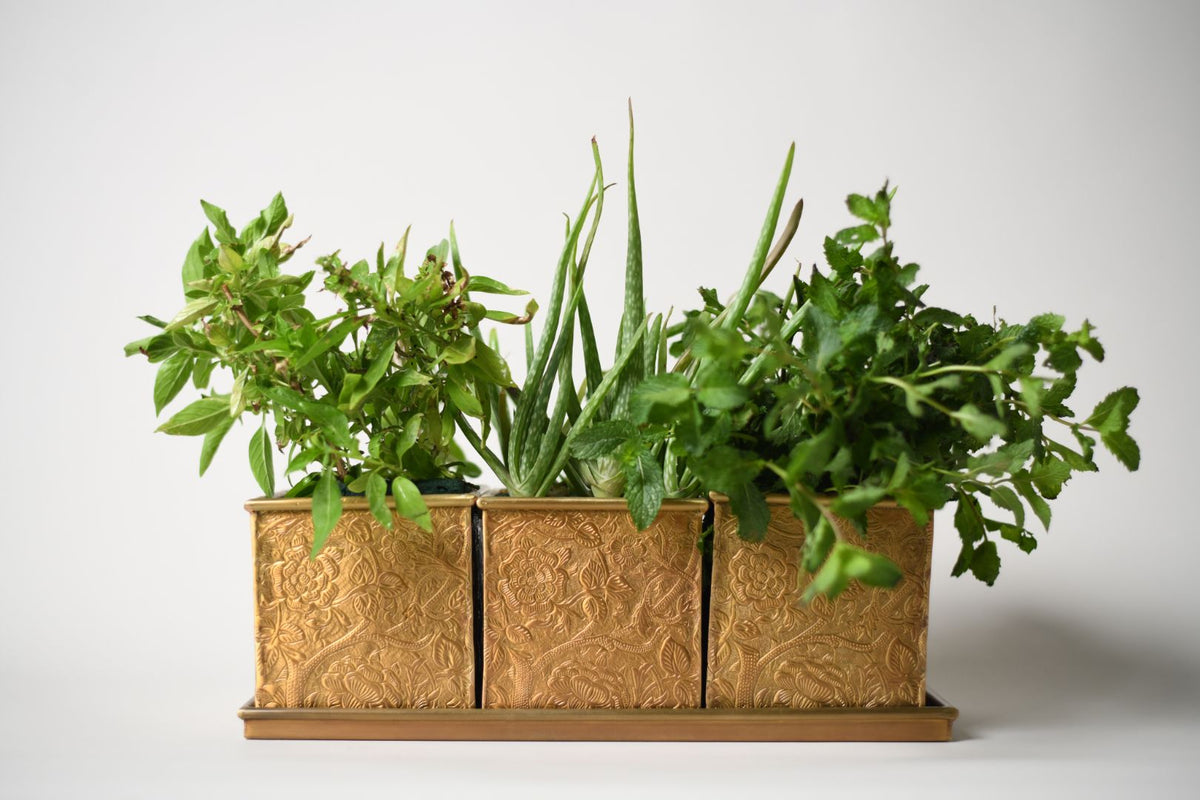
Graduated planter sets are popular for good reason, they allow you to group plants with different space requirements in one cohesive display. A well-designed set of three provides a small, medium, and large vessel, and the key is assigning plants thoughtfully:
-
Smallest pot: Fast-growing, compact plants you'll repot frequently, basil, mint, chives.
-
Medium pot: Slower-growing herbs or decorative plants that need slightly more root space, parsley, small pothos.
-
Largest pot: Your anchor plant, the statement piece of the arrangement, rosemary, a compact fern, or a trailing plant that spills naturally over the edge.
The Herb & Bloom Brass Planter Set is a good example of this principle applied to product design, three graduated sizes built to accommodate different plant types in one cohesive grouping, so you don't have to source pots of matching style from different places.
When to Repot
Knowing when to upsize is as important as getting the initial size right. Watch for these signs:
-
Roots are visibly growing out of drainage holes
-
The plant dries out unusually fast despite regular watering
-
Growth has noticeably stalled despite adequate light and feeding
-
The plant looks visually top-heavy or too large for its container
When repotting, always go up one size at a time, jumping too many sizes creates the same excess-moisture problem described earlier.
Common Sizing Mistakes to Avoid
The most common errors: planting a small seedling directly into a large decorative pot (creates root rot risk from excess soil moisture), and buying wide shallow bowls for deep-rooted plants. A practical rule of thumb, when in doubt, size slightly smaller and repot sooner, rather than oversizing and dealing with the consequences.
FAQs
Q: Can a pot actually be too big for a plant? A: Yes. Oversized pots hold more soil than the roots can access, which stays wet and promotes root rot. Always size up gradually, no more than 5 cm larger than the current pot diameter at each repotting.
Q: How do I know if my plant is root-bound? A: Roots growing out of drainage holes, soil drying out unusually fast, or roots visibly circling the top of the soil are the clearest signs. Remove the plant gently from its pot, if the root ball holds the shape of the container, it's time to size up.
Q: Should I use a planter with or without drainage holes? A: Drainage holes are always preferable for plant health. If you're using a decorative planter without drainage, use the double-potting method, a plastic nursery pot with holes inside the outer decorative vessel.
Q: Does planter material affect how often I should repot? A: Slightly. Non-porous pots like brass or glazed ceramic retain moisture longer, which can modestly slow root spread compared to terracotta. That said, repotting decisions should be based on visible root growth, not a fixed schedule or material assumption.

Written by Bhavini Khullar