

A Step-by-Step Guide for Ikebana Beginners: Rules and Techniques
Western floristry traditionally emphasizes volume, symmetry, and a dense concentration of color. The objective is often to fill all available space within a container to create a lush, overflowing visual effect. Japanese floral arrangement operates on a completely different set of principles. The practice focuses on linear composition, minimalism, and the intentional use of empty space. The goal is not to showcase a massive quantity of blooms but to highlight the unique character, curve, and natural growth pattern of a single stem or branch.
This discipline requires a shift in perspective. Practitioners must observe the subtle details of their botanical materials before making a single cut. A branch that is slightly bent or features an irregular leaf pattern is highly valued because it represents the authentic, imperfect reality of nature. The arrangement is meant to serve as a microcosm of the natural landscape, capturing a specific season and bringing the quiet tranquility of the outdoors into the interior environment.
What Is Ikebana? Meaning and Purpose of Japanese Flower Arrangement
Ikebana is the Japanese art of arranging flowers, branches, and other natural materials with attention to line, space, balance, and seasonality. Unlike a dense bouquet, a beginner ikebana arrangement gives each stem room to express its shape and direction. The result is a composition that feels intentional, asymmetrical, and connected to the natural world.
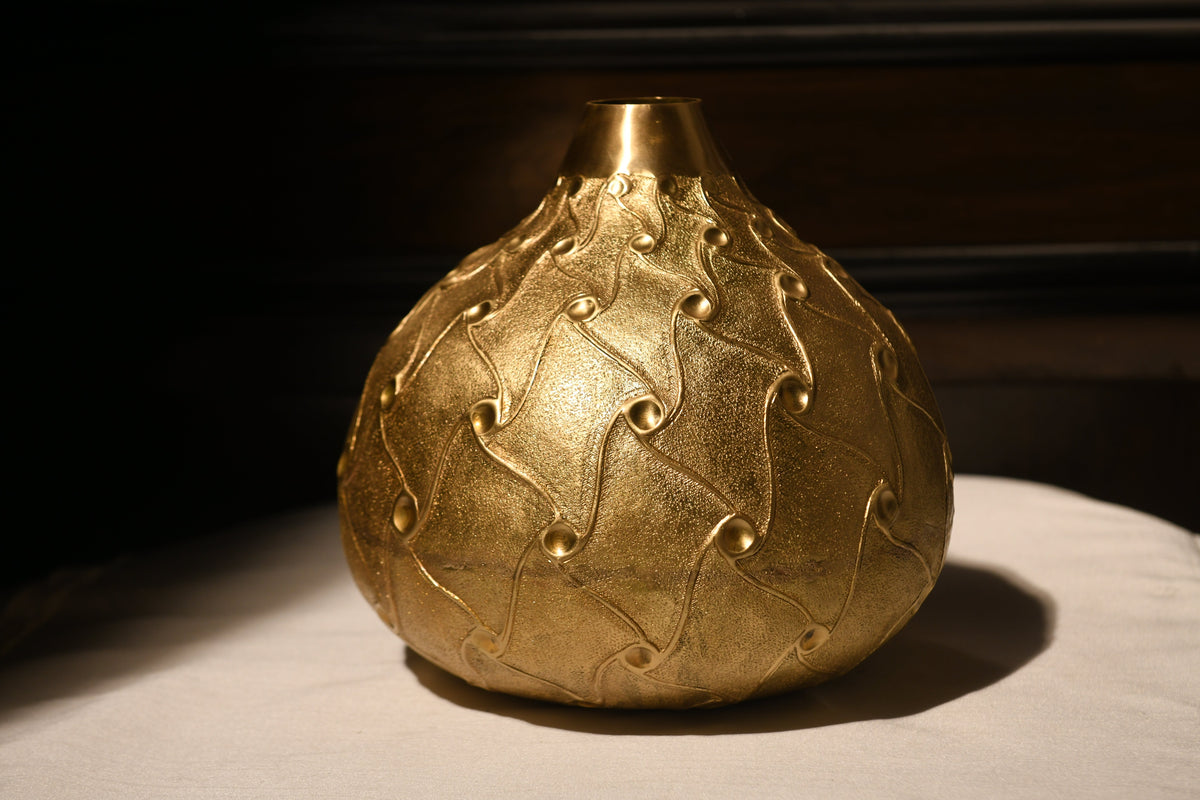
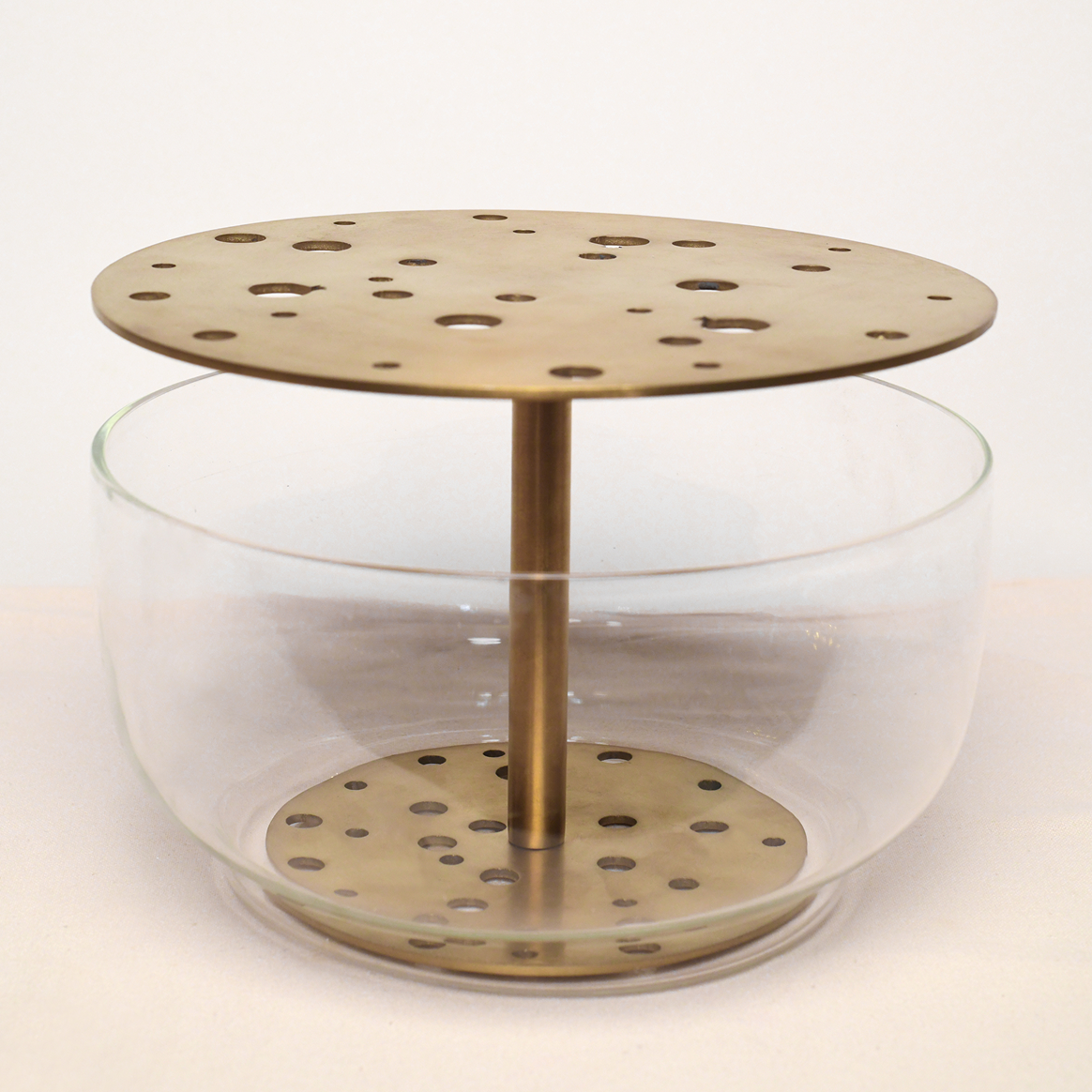
For a modern home, the vase is part of that composition. A purpose-built vessel such as the Anaar Bloom Brushed Brass Ikebana Vase provides a stable base while keeping the focus on the lines of the branches.
The Core Ikebana Rules and Principles for Beginners
Most beginner arrangements become easier when you focus on a few foundational rules:
- Build the composition around three directional lines rather than filling the vessel evenly.
- Use asymmetry and negative space to create movement and balance.
- Choose branches and flowers for their line, curve, texture, and season—not only for their color.
- Keep the arrangement intentional from its front-facing viewpoint.
- Let the container, water, and empty space remain part of the design.
Essential Tools for the Practice
Attempting this structural method of floral design with standard household items will yield frustrating results. Precise cuts and stable anchoring are mandatory, requiring a few specific tools. The most critical component is the kenzan. Sometimes referred to as a spiky frog, a kenzan is a heavy lead base embedded with dozens of sharp brass pins pointing upward. This tool rests at the bottom of the container and holds the stems firmly in their designated positions.
Standard kitchen scissors are highly detrimental to cut flowers. They crush the stem's vascular system, preventing the plant from absorbing water. Dedicated Japanese floral shears, known as hasami, feature thick, angled blades designed to slice cleanly through thick woody branches and delicate flower stems alike without causing cellular damage. A clean cut ensures the longevity of the arrangement. A small watering vessel with a narrow spout is also necessary for carefully adding water to the container without disturbing the precise placement of the finished botanicals.
Selecting an Appropriate Container
The vessel dictates the specific style of arrangement you will create. For beginners, the Moribana style is universally recommended. Moribana translates directly to piled up flowers, and it utilizes a wide, shallow basin called a suiban. This shallow profile makes it significantly easier to maneuver the kenzan and adjust the angles of the stems.
A modern ikebana vase designed for this style typically features a broad surface area and a depth of only two to three inches. The material and color of the vessel should never compete with the botanicals. Matte black ceramic, oxidized bronze, or heavy brushed metal are preferred because they visually ground the arrangement and recede into the background, allowing the organic materials to command full attention.
The Three Ikebana Lines: Shin, Soe, and Hikae Explained
Almost all traditional compositions are built around three main lines. Together they form an irregular triangle that gives the arrangement depth, direction, and asymmetric balance.
| Ikebana line | Traditional meaning | Role in the arrangement |
|---|---|---|
| Shin | Heaven | The tallest, most important line; it establishes the upward movement. |
| Soe | Humanity | The secondary line; it creates connection and balance beside Shin. |
| Hikae | Earth | The shortest line; it brings the composition back toward the vessel and water. |
These terms are often described as the primary, secondary, and tertiary lines. In other words, Shin is the primary line, Soe is the secondary line, and Hikae is the tertiary line. Strong branches usually suit Shin and Soe, while softer flowers or leaves can support Hikae.
How to Make an Ikebana Arrangement: A Step-by-Step Beginner Guide
Once you understand the three lines, the process is straightforward:
- Choose a suitable vessel and place the kenzan securely.
- Select one strong branch for Shin, then choose supporting materials for Soe and Hikae.
- Measure and cut each stem in proportion to the vessel and the Shin line.
- Set the three main lines first, checking the angles from the front and from above.
- Add only a few supporting stems, protecting the negative space around the structure.
- Refresh the water and refine any leaves or branches that distract from the main lines.
Measuring and Cutting the Main Subject
The length of your materials must be directly proportional to the size of your vessel. Guessing the lengths will result in an unbalanced composition that feels either too sparse or overwhelmingly top heavy. There is a specific mathematical formula used to determine the exact height of the primary Shin stem.
Measure the widest diameter of your shallow basin, and then measure its depth. Add those two numbers together. Multiply that sum by one and a half. The resulting number is the exact correct length for your Shin stem. Once you have made the clean, angled cut with your shears, press the stem firmly straight down into the brass pins of the kenzan, positioned slightly off center within the basin. Once it is securely impaled, gently tilt the stem forward and slightly to the left at a fifteen degree angle.
Positioning the Secondary and Tertiary Lines
With the primary line established, the secondary and tertiary lines are cut according to a strict ratio based on the height of Shin. The Soe stem should be cut to measure exactly two thirds the length of the Shin stem. Insert the Soe stem into the kenzan near the base of Shin, and tilt it further forward and to the left, aiming for a forty five degree angle.
The Hikae stem is the shortest, cut to exactly half the length of the Shin stem. Insert this final structural piece into the kenzan and angle it forward and to the right at a dramatic seventy five degree angle. At this stage, if you look at the arrangement from directly above, the tips of the three stems should form an invisible triangle over the water. This framework creates a dynamic sense of movement, guiding the viewer's eye from the highest point down to the surface of the container.
The Concept of Negative Space
In Western design, empty space is often viewed as a void that needs to be filled. In Japanese aesthetics, empty space is known as Ma, and it is considered a tangible, active design element. The air surrounding the branches is just as important as the branches themselves.
After placing the three main stems, beginners often feel tempted to add dozens of smaller filler flowers to hide the kenzan or bulk up the center. This ruins the structural integrity of the design. You may add a very small number of supplemental stems, called jushi, to support the main lines, but they must be cut shorter than the primary stems and kept strictly within the established triangular boundary. Pruning is also essential here. You must actively trim away excess leaves or confusing side branches that obscure the clean, structural lines of your primary stems.
Water as a Design Element
In the shallow Moribana style, the surface of the water is fully exposed and plays a critical role in the overall aesthetic. The water represents the earth's surface, a tranquil pond, or a reflecting pool. It introduces a horizontal plane that contrasts sharply with the vertical thrust of the branches.
Because the water is highly visible, it must be kept immaculately clean. Any floating debris, fallen leaves, or cloudy bacterial growth will instantly destroy the refined nature of the composition. The water level should be maintained just below the rim of the basin, completely submerging the heavy lead base of the kenzan but leaving the surface area wide open to catch the ambient light in the room.
Extending the Lifespan of the Botanicals
Creating the arrangement is only the first step; maintaining its vitality requires daily attention. The primary cause of premature wilting is air entering the vascular system of the cut stem, which blocks the uptake of water. To prevent this, professional practitioners often utilize a technique called mizugiri, which involves cutting the stems while they are completely submerged underwater. This ensures that water, rather than air, immediately rushes into the fresh cut.
Placement within the home also dictates longevity. The arrangement should be kept far away from direct, harsh sunlight, which will scorch delicate petals and rapidly evaporate the shallow water supply. It must also be protected from direct air currents, such as heating vents or air conditioning units, which severely dehydrate the plant tissues. The water must be completely drained and replaced with fresh, cool water every single day.
Transitioning from Practice to Interior Styling
Once the physical construction is complete, the placement of the vessel within your living space must be considered carefully. These arrangements are fundamentally different from standard floral bouquets, which are usually designed to be viewed equally well from a complete 360 degree angle. Traditional Japanese compositions possess a distinct, intentional front face.
They are ideally suited for placement against a blank wall, on a dedicated pedestal, or in an entryway console where the viewer will approach them from a specific, controlled direction. Integrating this level of organic artistry elevates the surrounding environment, turning a simple botanical exercise into a sophisticated piece of handcrafted home decor that commands quiet attention and respect. The arrangement serves as a daily reminder of patience, precision, and the elegant simplicity of the natural world.
Ikebana Schools and Styles: Ikenobo, Sogetsu, Moribana, and Nageire
Ikenobo is the oldest established school and is closely associated with traditional forms. Sogetsu encourages more contemporary and experimental compositions. Moribana uses a wide, shallow vessel and a kenzan, making it approachable for beginners, while Nageire uses a taller vessel and a different method of supporting the stems.
You do not need formal classes to begin. Start with the principles of line, space, balance, and seasonality, then explore the style that best suits your materials and home.

Frequently Asked Questions
What are the easiest branches for a beginner to use? Curly willow, dogwood, and camellia branches are excellent for beginners. They possess strong, distinct lines, hold up well after being cut, and are relatively easy to press firmly into the brass pins without the wood splitting.
Do I need to take formal classes to start practicing? Formal classes are not strictly necessary to begin enjoying the process. However, the art form has several deeply established schools, such as Sogetsu and Ikenobo, which have strict rules and certifications. Self study is perfectly fine for creating beautiful pieces for your own home.
Where can I purchase a kenzan? These tools are rarely found in standard craft stores. They must usually be ordered through specialty floral supply companies online or purchased directly from nurseries that specialize in bonsai and Eastern gardening supplies.
How often should I change the water in a shallow basin? The water must be changed daily. Because the basin is shallow, the water volume is low and can become stagnant or cloudy very quickly. Fresh water prevents bacterial growth and extends the life of the materials.
Can I mix dried and fresh materials in the same vessel? Yes, this is a very common practice, particularly in the more modern Sogetsu school. Mixing a heavy, dried piece of driftwood with fresh, delicate spring blooms creates a striking textural contrast and highlights the life cycle of nature.
What is the difference between Moribana and Nageire styles? Moribana uses a wide, shallow basin and a spiky base to hold the stems. Nageire translates to thrown in and uses tall, cylindrical vases without a spiky base. The stems in Nageire are held in place by crossbars or the walls of the tall vase itself.
How do I fix a heavy branch that keeps falling over? If a thick branch is tipping over, the pins may not be penetrating deeply enough. You can cut the bottom of the thick branch at a sharp slant, or you can split the bottom of the stem vertically so it slides more easily over the thick brass pins.
Is it absolutely necessary to use specialized shears? While you can physically cut a stem with kitchen scissors, doing so crushes the capillaries and drastically reduces the lifespan of the flower. Investing in proper, thick bladed floral shears is highly recommended for the health of the plants.
Should I use floral foam instead of a spiky base? No. Floral foam is a modern Western invention that introduces synthetic microplastics into the water and does not provide the sheer weight necessary to anchor large, heavy branches. It also contradicts the natural, sustainable philosophy of the practice.
How long does a typical composition last? The longevity depends entirely on the materials chosen and the ambient temperature of the room. Thick woody branches may last for several weeks, while delicate blooming flowers may only last for three to five days before they begin to fade and drop petals.
Shop the pieces from this guide: Anaar Bloom Brushed Brass Ikebana Vase (Large), Anaar Bloom Brushed Brass Ikebana Vase (Small) and Anaar Bloom Chrome Ikebana Vase (Large).
Explore related Byaas pieces: vases and planters · ikebana vases.

Written by Bhavini Khullar