
Elevating Your Next Dinner Party with Brass Napkin Rings and Coasters
The process of setting a dining table for a formal gathering extends far beyond the simple placement of plates and cutlery. It is a highly structured exercise in temporary architecture. When you invite guests into your home for a curated meal, the environment you build at the table dictates their entirely psychological and physical experience for the next several hours. A bare table paired with minimal functional items signals a highly casual, rushed environment. Conversely, a layered tablescape utilizing multiple textures and distinct spatial zones communicates deliberate care and slowing down.
The foundation of any sophisticated dining experience relies on the interplay between soft and hard materials. Textiles, such as heavy cotton tablecloths or crisp linen runners, provide the necessary acoustic dampening and tactile softness required for comfort. However, a table consisting entirely of soft fabrics and fragile ceramics lacks visual anchor points. Integrating hard, dense materials into the individual place settings provides structural contrast. High quality metals bring an immediate sense of permanence and gravity to the table. By meticulously arranging these heavy details around the perimeter of the dining surface, you create a defined, orderly space that prepares your guests for a structured culinary event.
Protecting Valuable Wood Surfaces During Service
While aesthetic presentation is a primary concern during a dinner party, the physical protection of your dining room furniture must remain the absolute priority. Fine dining tables are typically constructed from porous hardwoods like mahogany, walnut, or cherry. These materials are frequently finished with delicate shellacs, waxes, or varnishes that are highly susceptible to environmental damage.
During a multi course meal, the table is subjected to significant hazards. Chilled white wine glasses or iced water goblets create heavy condensation. When this moisture runs down the glass and pools directly onto the wood, it becomes trapped beneath the base. This prolonged exposure permanently bleaches the wood fibers, resulting in distinct, cloudy white rings that require professional refinishing to remove. Heat transfer from warm coffee mugs poses an equal threat, as extreme temperatures can instantly blister a delicate varnish. Utilizing solid brass coasters beneath every beverage glass is a mandatory preventative measure. These heavy metal barriers intercept the moisture and block the downward transfer of heat, completely insulating the fragile wood below while simultaneously adding a touch of golden warmth to the visual layout of the table.
Elevating Linen Presentation with Metallic Accents
The transition from disposable paper napkins to reusable cloth napkins is the defining first step in elevating any dining experience. However, simply laying a flat, unstyled square of cloth next to a plate represents a missed design opportunity. The presentation of the linen is the first physical interaction your guest will have with the tablescape, and it sets the tactile standard for the remainder of the evening.
Securing the folded fabric with solid brass napkin rings fundamentally alters the guest experience. The heavy, cold weight of the metal object in their hand immediately conveys a subconscious message of luxury and intentionality. The folding technique you choose should complement the rigidity of the ring. The classic pinch and pull method is highly effective. You lay the fabric completely flat, pinch the exact center of the square, and pull the fabric upward, sliding the metal ring over the tapered point and sliding it down to the middle. This creates an elegant, flared canopy of fabric at the top with a neat, controlled base. The resulting structured shape provides necessary vertical height to an otherwise flat place setting, adding dimension and volume to the perimeter of the table.
Harmonizing Table Micro Details with the Room
A successful tablescape does not exist in a vacuum. It must communicate seamlessly with the permanent architectural features and existing decor of the surrounding dining room. A common styling failure occurs when the items placed on the table actively clash with the environmental finishes surrounding them, creating a subtle but persistent visual dissonance.
You must analyze the permanent fixtures within your space before selecting your tabletop accessories. Look at the chandelier suspended above the table, the hinges on the nearby doors, and the hardware on your dining room sideboards. If the room is grounded in warm tones, such as exposed red brick, amber lighting, or golden oak floors, your table accessories should echo that warmth. Introducing golden metallic elements at the micro level ties the temporary dinner setting directly to the permanent structure of the house. This careful harmonization proves to the viewer that every single element in the room, down to the smallest accessory, was selected with deliberate intent and holistic vision.
The Interaction Between Candlelight and Polished Alloys
Lighting is the ultimate variable in interior design, and its importance is magnified exponentially during an evening dinner party. Harsh overhead lighting washes out the complex colors of the food and flattens the dimensional textures of the table setting. The most universally flattering and inviting light source is the low, flickering illumination provided by natural firelight.
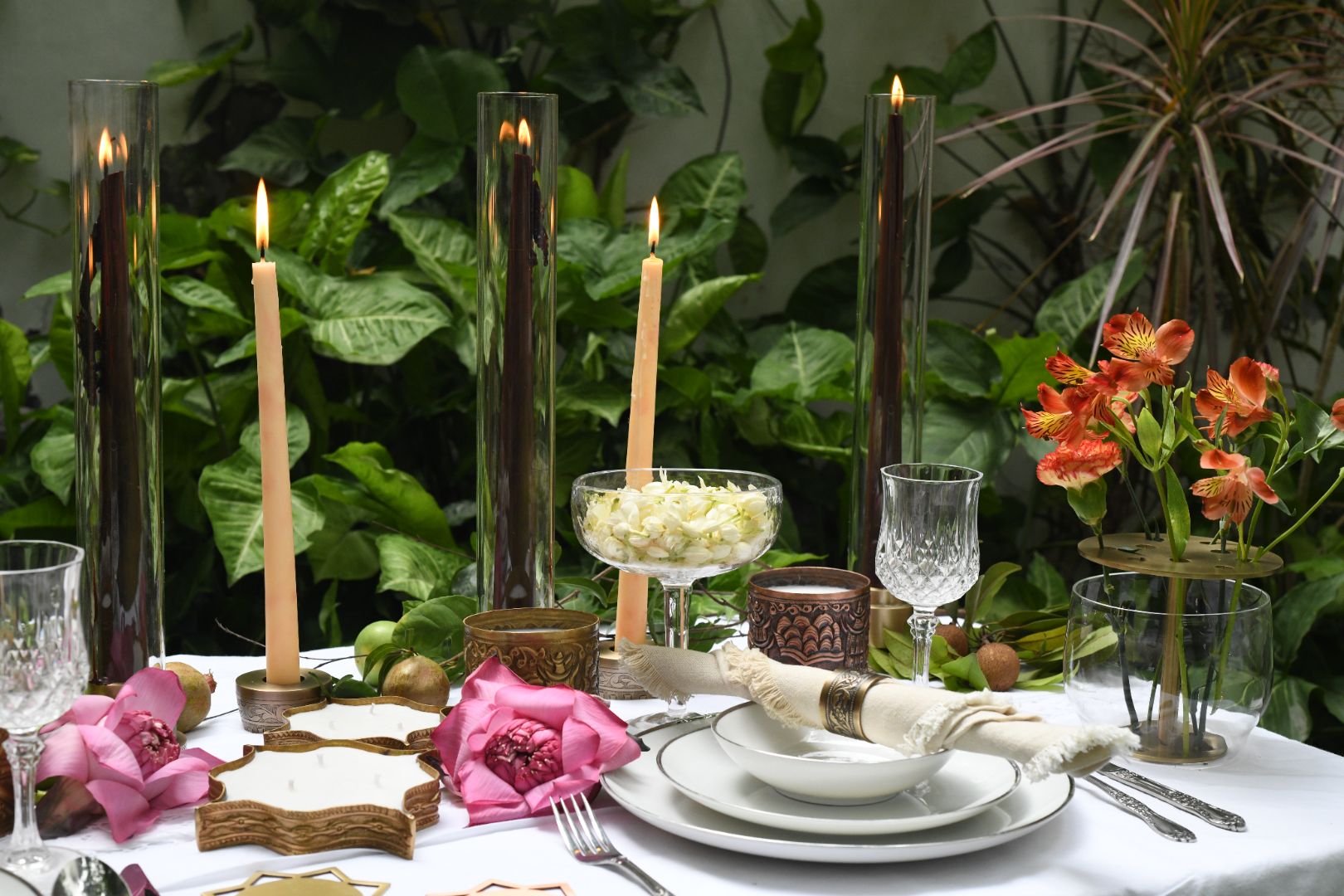
The strategic placement of metallic accessories plays a crucial role in maximizing this low light environment. Unlike matte ceramics or dark textiles which absorb light, metal surfaces capture and reflect it. When you place reflective alloys around the perimeter of the table, they act as miniature mirrors. The ambient glow from a central candle is caught by the curved surfaces of the metal rings and the flat planes of the drink rests. This creates dozens of tiny, warm highlights scattered across the entire dining surface. This interplay of light and metal actively brightens the dark edges of the table, expanding the visual footprint of the illumination without requiring you to crowd the space with additional, obstructive light sources.
Establishing an Anchor with Central Arrangements
While the individual place settings provide detail and function to the edges of the table, the center of the surface requires a dominant visual anchor. Without a strong focal point, the scattered plates, glasses, and utensils will look like disorganized clutter rather than a cohesive design. The middle of the table must command attention and bridge the gap between the guests sitting across from one another.
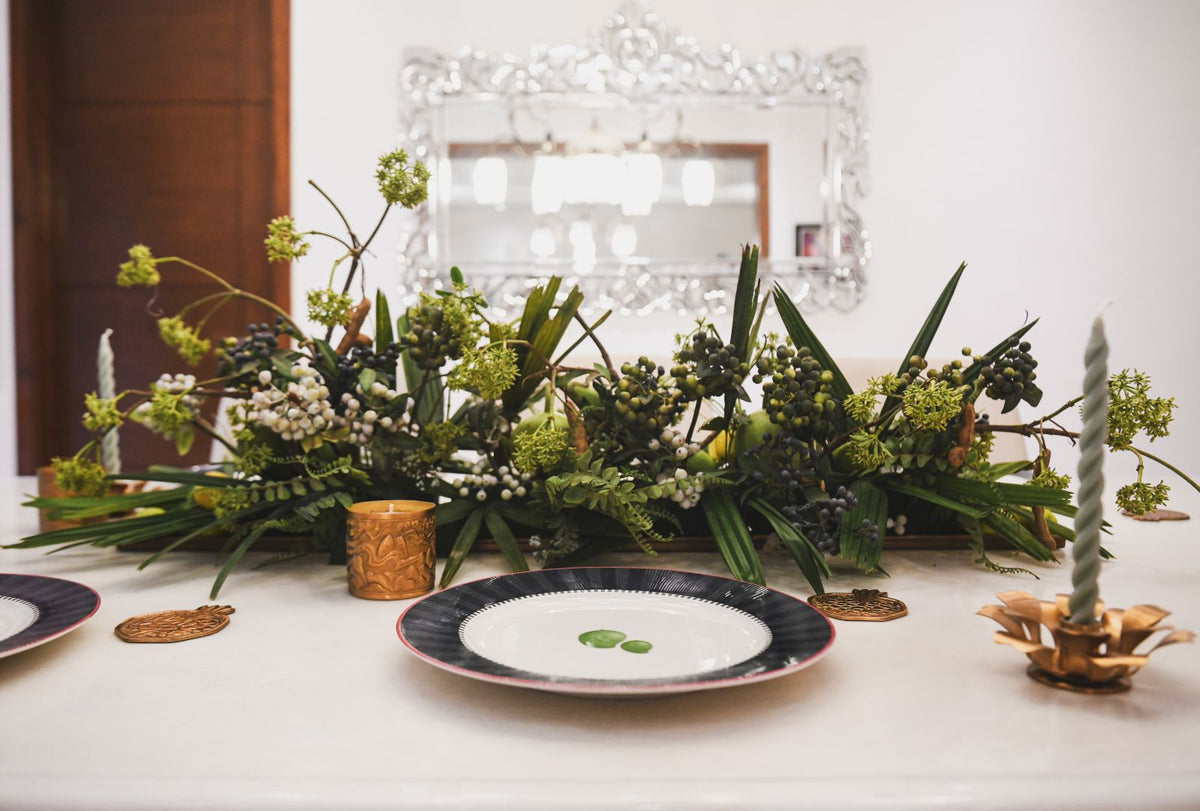
Deploying a substantial piece of centerpiece table decor is essential for grounding the overall layout. The material and weight of this central object should directly relate to the smaller metallic details distributed at the individual place settings. If you are utilizing golden metal accents for the napkins and beverages, the central anchor should feature the same warm alloy. This repetition of material creates a clear visual dialogue between the macro elements in the center and the micro elements at the perimeter. The central arrangement must also adhere strictly to height restrictions, ensuring it remains well below the eye level of seated guests so that it does not block conversation or eye contact across the table.
Strategic Placement of Drinkware and Accessories
The precise spatial layout of a formal place setting is governed by strict geometric rules derived from centuries of hospitality tradition. Understanding exactly where to place each accessory ensures that the table looks orderly and that the guests can navigate their utensils and glassware without confusion or physical awkwardness.
The primary dinner plate always serves as the exact center point of the individual setting. The folded napkin, secured by its metal ring, can be placed directly in the center of the empty plate to serve as an immediate focal point, or it can be positioned squarely to the left of the forks. The beverage station belongs strictly to the top right quadrant of the setting. The protective metal coaster should be placed approximately two inches above the tip of the dinner knife. If you are serving both water and wine, the water goblet sits directly above the knife on the coaster, while the wine glass is positioned slightly to the right and slightly lower, angling toward the edge of the table. This specific diagonal alignment provides the guest with unhindered access to their beverages while keeping the center of the setting clear for food service.
Maintaining the Integrity of Natural Finishes
The conclusion of a successful dinner party requires the immediate care and maintenance of the accessories used. Items placed on a dining table are inevitably exposed to acidic food spills, greasy fingerprints, and sticky wine drips. If left untreated, these organic compounds can quickly damage the surface finishes of premium materials.
Raw, unlacquered metals require specific attention to prevent uneven oxidation. After the guests depart, you must wipe down every metallic surface with a clean, damp microfiber cloth to remove any residual sugars or acids. Do not submerge these items in soapy dishwater or place them in a dishwasher, as prolonged exposure to hot water and harsh detergents will strip the natural patina and cause rapid, destructive tarnishing. Once wiped clean, the items must be dried completely with a soft towel before being stored away. Proper, immediate maintenance ensures that these functional accessories remain pristine and ready to elevate your next formal gathering.
Frequently Asked Questions
Where exactly should a coaster be placed on a formal table? It should be positioned in the top right quadrant of the individual place setting. Specifically, it should sit approximately two inches directly above the tip of the dinner knife, placing the beverage within easy reach of the guest's right hand.
How do you fold a napkin for a heavy metal ring? The pinch and pull method is the most reliable. Lay the fabric completely flat, pinch the dead center of the square, lift it straight up, and slide the metal ring over the pointed top down to the middle section of the fabric.
Can I mix silver cutlery with golden table accessories? Yes. Mixing warm and cool metals is a recognized technique in contemporary design. Because stainless steel or silver flatware is considered a neutral baseline on a modern table, introducing golden or brass accents provides necessary warmth and visual interest.
Do metal drink rests scratch wooden tables? High quality metal accessories designed for tabletop use should always feature a soft, protective backing made of cork, felt, or rubber. If your items lack this backing, you must add adhesive felt pads to the bottom to prevent permanent scratching.
Should the napkin go on the plate or to the side? Both placements are formally acceptable. Placing the secured fabric directly in the center of the empty dinner plate saves horizontal space and creates a strong focal point. Placing it to the left of the forks is the traditional, wider layout.
How do I clean wine off a raw metal accessory? Do not use harsh chemical sprays. Immediately wipe the spill with a cloth dampened with warm water. If the wine has dried and become sticky, use a tiny drop of mild dish soap on the damp cloth, wipe the area, and dry it completely.
Is it necessary to use a tablecloth if I have protective accessories? No. If you have a beautiful, high quality wood table, utilizing individual protective barriers under the glasses and utilizing placemats under the hot plates allows you to expose and appreciate the natural wood grain without risking permanent moisture or heat damage.
What is the standard size for a formal cloth napkin? A true formal dinner napkin is significantly larger than a casual luncheon napkin. It should measure between twenty and twenty two inches square. This large surface area provides ample fabric for elaborate folding techniques and completely covers the guest's lap.
How many drink resting stations should I provide per guest? You generally only need one per guest, positioned specifically for their primary water goblet or iced beverage. Wine glasses, particularly those holding red wine at room temperature, do not create condensation and can safely rest directly on the tablecloth or bare wood.
Can I use these metallic accessories outdoors? You can use them for an outdoor evening meal, but they should never be left outside permanently. High humidity, morning dew, and rain will cause rapid oxidation and severe tarnishing. They must be brought back indoors immediately after the outdoor event concludes.

Written by Bhavini Khullar