

Handcrafted Home Decor: Why Artisanal Metalwork is Worth the Investment
The global manufacturing landscape has spent the last several decades prioritizing speed and volume over longevity. The interior design sector experienced a massive influx of mass produced goods engineered for temporary use. These items are frequently constructed from hollow synthetic materials, sprayed with artificial finishes, and designed to follow fleeting seasonal trends. This cycle of rapid consumption inevitably results in residential spaces that feel generic and lack historical depth.
A significant paradigm shift is currently occurring among homeowners and professional designers. There is a growing rejection of disposable interiors in favor of permanence. Consumers are actively seeking out objects that carry a distinct narrative and possess the structural integrity to last multiple lifetimes. This search for authenticity has led to a major resurgence in the demand for true handcrafted home decor. Acquiring objects made by human hands represents a return to mindful purchasing. It transforms the act of decorating a room from a simple retail transaction into an investment in generational heritage.
Defining True Artisanal Metalwork
The term artisanal is frequently misused in modern marketing to describe items that are actually produced on factory assembly lines. True artisanal metalwork is defined by the absence of heavy industrial automation. It relies on the transfer of specialized knowledge from one generation to the next. The individuals creating these pieces do not merely operate machines. They utilize manual tools, physical strength, and a deep understanding of metallurgy to manipulate raw materials into finished shapes.
This level of craftsmanship cannot be rushed. Creating a single object may take days or even weeks of dedicated labor. The artisan must understand how different alloys react to heat, how they stretch under pressure, and how they oxidize when exposed to the air. This intimate relationship between the creator and the material ensures that the resulting object possesses a level of character and complexity that a programmable machine is simply incapable of replicating.
The Mechanics of Hand Beaten Techniques
One of the most revered methods in traditional metal fabrication is the hand beaten technique. This process is physically demanding and requires immense precision. The artisan begins with a flat sheet of raw metal, typically brass or copper. The metal is repeatedly heated in a forge to soften its molecular structure, a process known as annealing.
Once the metal is pliable, the artisan uses an array of specialized hammers and wooden mallets to strike the surface. By strategically hammering the metal over a curved anvil, the flat sheet is slowly coaxed into a three dimensional vessel or a sculptural form. Every single strike of the hammer leaves a subtle, permanent indentation on the surface of the metal. These thousands of overlapping marks create a deeply faceted, textured finish. This texture is not merely decorative. The physical act of hammering actually work hardens the alloy, making the final object structurally stronger and highly resistant to denting.
Vertical Integration and Supply Chain Transparency
A major factor separating authentic high end home decor from generic retail goods is the structure of the supply chain. Many modern brands utilize a white labeling model. They select pre designed items from massive overseas catalogs, stamp their own logo on the box, and resell them. The brand has zero input into the actual creation process or the working conditions of the factory.
Heritage brands operate on a completely different model known as vertical integration. In a vertically integrated system, the brand owns and oversees the entire production process from the initial sketching phase to the final polishing. They operate their own workshops and employ the master artisans directly. This transparency guarantees strict quality control at every stage of fabrication. It ensures that the raw materials are ethically sourced, the traditional techniques are respected, and the final products adhere to strict structural standards rather than simply meeting a cheap price point.
Recognizing Authentic Heirloom Quality Markers
When evaluating metal objects for purchase, consumers must know how to identify the physical markers of genuine handcraft. The most obvious indicator is weight. Mass produced metal items are often spun from incredibly thin sheets of aluminum or cast from cheap zinc alloys to save money on shipping. True artisanal pieces are typically forged from thick, solid brass or bronze. They possess a surprising, substantial density when lifted.
The second indicator involves close visual inspection. Factory made items pride themselves on absolute, flawless uniformity. If you look at a factory made hammered bowl, the hammer marks will be perfectly evenly spaced and identical in depth because they were stamped by a hydraulic press. Authentic hand beaten items display natural variation. The hammer marks will differ slightly in size, and the rim of a bowl may feature very subtle, microscopic undulations. These are not flaws. They are the undeniable physical proof of human labor.
The Durability and Longevity of Solid Heavy Metals
The concept of an heirloom object relies entirely on its ability to survive the passage of time without degrading. Materials like plastic, resin, and thin glass are highly susceptible to cracking, fading, and catastrophic shattering. They possess a definitive expiration date.
Solid copper alloys like brass are fundamentally different. They are metallurgically stable and highly resistant to structural decay. They do not shatter when dropped. They do not become brittle when exposed to sunlight. A heavy metal object can endure decades of daily physical handling, moving from one house to another, and passing from one generation to the next without losing its functional utility. This extreme durability justifies the initial financial investment, as the cost per use over a fifty year period drops to near zero.
Understanding Natural Imperfections as Value Indicators
Western consumer culture has been heavily conditioned to view any imperfection as a defect requiring a return or a refund. In the realm of slow craftsmanship, this perspective must be unlearned. The Japanese philosophy of Wabi Sabi embraces the beauty of things that are imperfect, impermanent, and incomplete. This philosophy applies directly to artisanal metalwork.
A slight asymmetry in the curve of a handle, a tiny tool mark left behind by a file, or a dark spot of uneven oxidation in the patina are the specific elements that give the object a soul. If you purchase two identical items from a true artisan, they will never be exact clones of one another. Each piece carries the distinct signature of the specific day it was made and the specific artisan who made it. These anomalies elevate the object from a simple household commodity to a unique piece of functional art.
The Environmental and Ethical Impact of Slow Craftsmanship
The hidden cost of fast furniture is the immense environmental devastation caused by cheap manufacturing and rapid disposal. Millions of tons of synthetic home goods end up in global landfills every single year because they were not designed to be repaired or preserved.
Supporting traditional artisanal workshops is an inherently sustainable practice. The slow, deliberate creation of solid metal goods produces significantly less industrial waste. Furthermore, because these items are designed to last indefinitely, they completely exit the waste stream. They are cherished, maintained, and inherited rather than discarded. Ethically, purchasing these items ensures that traditional, generational skills are kept alive. It provides fair wages to highly skilled workers in specialized workshops rather than feeding the exploitative labor practices common in massive, anonymous factories.
Integrating Distinctive Metal Pieces into Residential Spaces
Once acquired, these heavy, textured objects must be placed thoughtfully within the home to maximize their visual impact. Because artisanal metalwork carries immense visual weight, it should be given room to breathe. Crowding a handcrafted piece among dozens of cheap plastic trinkets completely dilutes its presence.
These items function best as standalone focal points. Placing tall, hand beaten modern metal vases on an entryway console table establishes an immediate tone of quality the moment a guest enters the home. In a living room, utilizing substantial brass wall art above a fireplace draws the eye upward and provides a heavily textured contrast against smooth painted drywall. The goal is to allow the natural light in the room to interact with the hammered surfaces, highlighting the complex geometry and the warm, golden patina of the metal.
The Financial Reality of Investing in Quality
It is an unavoidable fact that true artisanal metalwork carries a significantly higher initial purchase price than mass produced alternatives. This price directly reflects the cost of premium raw materials, the ethical compensation of master craftspeople, and the extensive hours of labor required to finish a single piece.
However, viewing this purely as an expense is a miscalculation. Purchasing a cheap item that must be replaced every three years due to breaking, fading, or going out of style ultimately costs more over a decade than buying one perfect, durable item once. Investing in high quality, handcrafted decor is an exercise in long term financial efficiency. You are acquiring permanent assets for your home that will never need to be upgraded or replaced, completely breaking the expensive cycle of constant redecoration.
Frequently Asked Questions
What does vertically integrated mean in home decor? It means the brand owns and controls the entire production process. They source the raw materials, employ the artisans in their own workshops, and sell the finished product directly, bypassing third party factories and middlemen.
How can I tell if a metal bowl was hand beaten or machine stamped? Look closely at the indentations. Machine stamped patterns are perfectly uniform and repetitive. Hand beaten marks will show slight variations in size, depth, and spacing due to the natural inconsistency of a human swinging a hammer.
Why is solid brass so expensive compared to other metals? Brass is an alloy of copper and zinc. Copper is a highly valuable, globally traded commodity. The raw material cost is inherently high before the extensive labor required to forge and polish the metal is even factored in.
Do handcrafted metal items lose their value if they tarnish? No. In the world of high end decor, natural tarnish is called patina, and it is highly desired. The darkening of the metal proves its authenticity and adds historical character. You can always polish it back to a shine if you prefer.
Is it normal for a handmade vase to be slightly asymmetrical? Yes. Perfect mathematical symmetry is a hallmark of computer guided machinery. A slight lean or a millimeter difference in the rim height is entirely normal and expected when an object is shaped solely by human hands.
What is the best way to clean a hand beaten metal object? Dust it regularly with a dry microfiber cloth. Avoid using harsh chemical sprays, as the liquid can pool in the hammered indentations and cause uneven, accelerated corrosion or strange discoloration spots.
Are artisanal items considered an eco friendly purchase? Yes. Because they are made from highly durable materials designed to last lifetimes, they stay out of landfills. Furthermore, manual forging processes generally require significantly less electricity and produce less toxic waste than automated factory production.
Why do interior designers prefer unlacquered brass? Lacquered brass is coated in clear plastic to stop it from aging, but the plastic eventually peels and looks terrible. Unlacquered brass is a living finish that ages gracefully, developing rich, complex colors as it interacts with the environment.
How heavy should a quality piece of metal decor be? It should feel surprisingly dense for its size. If a large metal vase feels light enough to lift easily with one finger, it is likely made from cheap, thin sheet metal that will dent easily upon impact.
Can I mix modern furniture with traditional handcrafted decor? Absolutely. This combination creates a highly sophisticated, transitional aesthetic. The clean, straight lines of modern furniture provide an excellent, quiet background that allows the heavy texture of traditional metalwork to stand out dramatically.
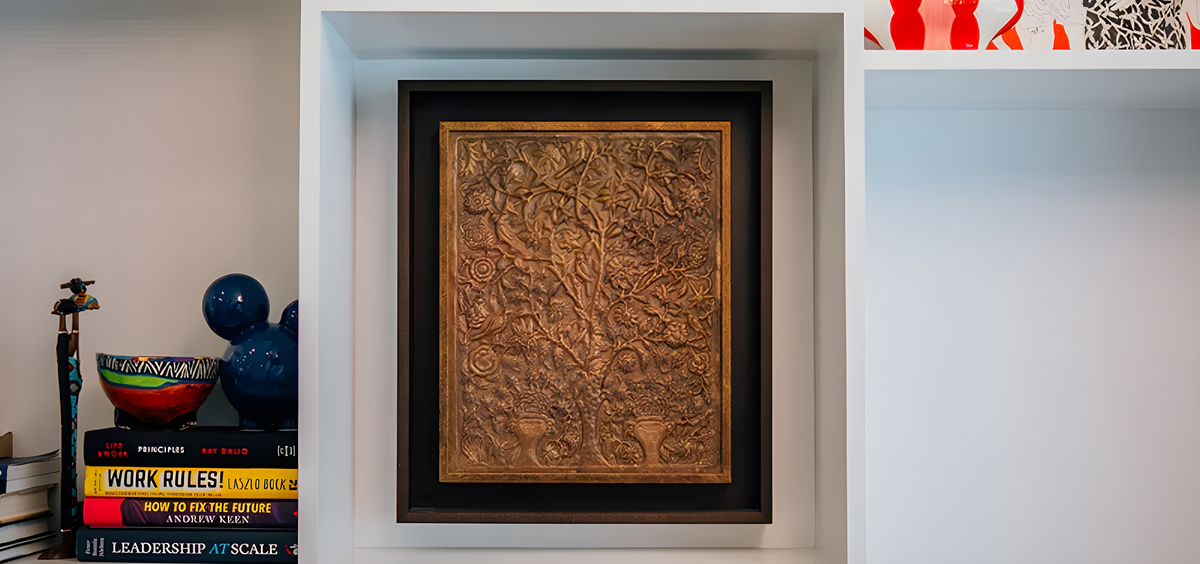
Shop the pieces from this guide: Tree of Life Repoussé Brass Wall Art Panel, Sculpted Crane Repoussé Heirloom Vase and Pomegranate Repoussé Brass Serving Platter.

Written by Bhavini Khullar