

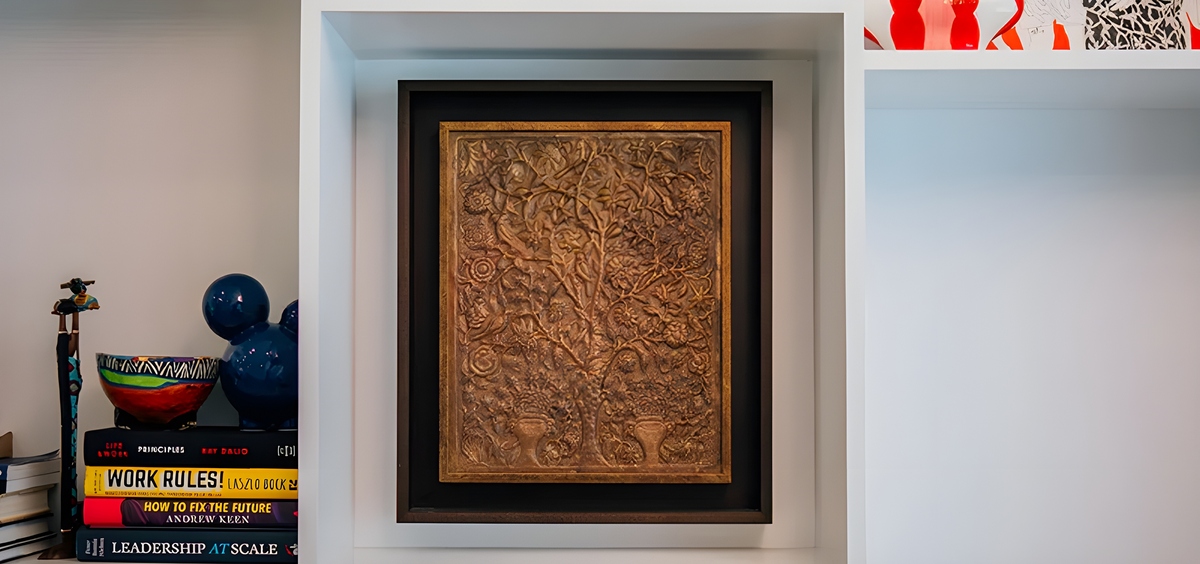
How to Hang Statement Wall Art to Anchor Your Living Room
The foundation of a well designed living room relies on the careful balance of horizontal and vertical planes. Homeowners dedicate immense amounts of time and financial resources to selecting the perfect sofas, coffee tables, and rugs. These items successfully populate the lower horizontal hemisphere of the room. However, when the vertical spaces remain entirely empty, the room suffers from a severe visual imbalance. The furniture appears to be floating aimlessly at the bottom of a vast, unfinished box.
Applying careful attention to your vertical planes is the only way to ground the architecture of the space. Large, commanding objects placed on the walls act as visual anchors. They draw the human eye upward, acknowledging the full height of the ceiling and making the room feel significantly more expansive and cohesive. Selecting appropriate statement wall art is not merely a final decorative afterthought. It is a fundamental structural decision that dictates the mood, the spatial perception, and the overarching aesthetic authority of the entire living area.
Transitioning to Three Dimensional Decor
For many decades, residential wall design was strictly limited to two dimensional media. Framed oil paintings, watercolor landscapes, and photographic prints were the standard default choices. While beautiful, these flat mediums often lack the physical presence necessary to truly command a large, empty living room wall. They absorb light uniformly and sit completely flush against the drywall, offering very little dynamic interaction with the physical environment.
Modern interior styling heavily favors the introduction of sculptural wall art. By utilizing pieces that protrude physically into the room, you introduce the critical element of depth. The three dimensional nature of these objects allows them to capture shadows and reflect ambient light throughout the day. As the sun moves across your windows, the appearance of a protruding, heavily textured object changes continuously. This dynamic visual shift brings a sense of life and movement to the room that a flat canvas simply cannot provide.
The Mathematics of Scale and Proportion
The most frequent error committed during interior installations is the complete misunderstanding of scale. A piece of art may be stunning in isolation, but if it is too small for the wall it occupies, it will look timid and entirely out of place. Conversely, a piece that is too large will physically overwhelm the surrounding furniture, making the room feel cramped and claustrophobic.
Professional installers rely heavily on the two thirds mathematical rule. When you are hanging an object directly above a piece of furniture, the width of the art should measure approximately two thirds the total width of the furniture below it. For example, if your living room sofa is ninety inches wide, the object centered above it should be roughly sixty inches wide. This proportion creates a perfect visual triangle that feels inherently balanced to the human eye. If you cannot find a single object large enough to meet this mathematical requirement, you must group several smaller objects together so their combined total width achieves the correct structural proportion.
Calculating the Ideal Viewing Elevation
Another highly common mistake is hanging art too close to the ceiling. Homeowners often judge placement while standing directly in front of the wall, leading them to position the piece based on their own specific height. This results in an uncomfortable viewing experience for guests who are shorter or for individuals who are seated in the living room.
To achieve a polished, high end look, you must adopt the strict elevation standards utilized by professional art galleries and museums globally. The center point of any individual piece or grouped arrangement should sit exactly fifty seven to sixty inches from the floor. This measurement represents the average human eye level. By adhering to this rule, you ensure the art connects visually with the human occupants rather than floating uselessly near the crown molding. The only exception to this rule occurs when the ceiling is exceptionally low or when the art is being hung directly above an unusually tall mantelpiece.
Strategic Centering Over Furniture and Mantels
When positioning a heavy focal point, the architecture of the room dictates your centering strategy. You must decide whether the object relates primarily to the entire wall or strictly to the furniture positioned directly below it.
If you are hanging an object above a sofa, the center of the art must align perfectly with the center point of the sofa, regardless of where the sofa sits on the wall. If the sofa is pushed slightly to the left, the art must follow it to the left. Attempting to center the art on the total length of the drywall while the furniture below is off center creates a jarring visual disconnect. The art and the furniture must function as a single, unified column. When dealing with architectural features like fireplaces, the masonry dictates the placement. The decor must be centered exactly on the firebox and the mantelpiece to honor the permanent symmetry of the room's construction.
Engineering Secure Installations for Heavy Objects
The physical weight of metallic decor requires strict adherence to safety and engineering principles. A small nail tapped casually into drywall is completely insufficient for holding heavy items like large brass wall decor. Relying on inadequate hardware will inevitably lead to catastrophic failure, resulting in severe damage to the object, deep gouges in your drywall, and potential injury to anyone sitting below.
Before lifting a heavy piece, you must locate the wooden framing studs hidden behind the drywall using an electronic stud finder. The most secure installation involves driving heavy steel screws directly through the drywall and deep into the solid wood of these studs. If your desired placement does not align with a wall stud, you must utilize heavy duty toggle bolts. Toggle bolts feature metal wings that open wide behind the drywall, distributing the immense weight of the object over a much larger surface area. You must also verify the exact weight rating printed on the hardware packaging to guarantee it exceeds the total weight of your decorative piece.
The Interplay of Natural Light and Metal Surfaces
When you incorporate metal objects into your vertical design, you must carefully analyze the light pathways within your living room. Metal is highly reflective, and the specific location you choose will dictate how aggressively the object shines.
Hanging a highly polished metallic object directly opposite a massive, unobstructed south facing window will result in a blinding glare during the afternoon hours. This intense reflection can be highly distracting and uncomfortable for anyone trying to relax in the space. The optimal placement for reflective metal is on an adjacent wall, perpendicular to the primary light source. This positioning allows the natural light to graze across the surface of the metal gently. It highlights the complex textures and the rich, golden patina of the material without creating a harsh, mirror like reflection that dominates the entire room.
Artificial Illumination Strategies for Textured Pieces
To maximize the visual impact of your installation during the evening hours, you must introduce dedicated artificial lighting. Standard overhead ambient lighting is generally insufficient for highlighting the complex depths and details of a sculptural focal point.
The most traditional and elegant solution is the installation of a dedicated picture light mounted on the wall directly above the object. This fixture casts a focused, downward beam that isolates the piece from the rest of the dark room. For heavily textured items, interior designers often utilize a technique called raking light. This involves positioning directional lighting, such as ceiling track heads or adjustable floor sconces, at a very sharp, steep angle relative to the wall. This steep angle causes the protruding elements of the sculpture to cast long, dramatic shadows across the flat drywall, instantly amplifying the three dimensional presence of the object and transforming it into a dramatic nighttime feature.
Integrating Dimensional Objects with Flat Media
You are not required to choose exclusively between flat canvas paintings and protruding metal sculptures. In fact, combining these two very different mediums on the same wall is a highly advanced technique used in high end home decor to create a rich, collected aesthetic.
If you have a large, empty expanse of drywall, consider building an eclectic gallery arrangement. Use a single, heavy piece of metallic sculpture as the central anchor of the display. Surround this central anchor with an asymmetrical arrangement of traditional framed photographs, charcoal sketches, or oil paintings. The physical depth of the central sculpture provides a striking contrast to the flat glass profiles of the surrounding frames. This intentional mixture of textures, materials, and depths proves to the viewer that the collection was curated thoughtfully over many years rather than purchased in a single, matching set from a commercial catalog.
Establishing Thematic Cohesion Through Color
While an oversized sculpture serves as the primary focal point, it must not look completely alienated from the rest of the room. A common design failure occurs when a homeowner installs a massive, brilliant gold piece on the wall but features absolutely no other warm tones anywhere else in the living space. The object will look entirely disconnected from its environment.
To integrate the piece successfully, you must echo its color and material in smaller, subtle ways throughout the lower hemisphere of the room. If your wall anchor is a deep, oxidized brass, introduce a few small, corresponding elements on your coffee table or sideboards. A small brass tray, a golden table lamp, or a set of warm metallic coasters will bridge the visual gap. This strategic repetition of the primary material pulls the entire room together, ensuring that the massive wall installation feels like a natural, intentional extension of the existing furniture and architectural palette.
Frequently Asked Questions
How high above a sofa should I hang a large piece of art? The bottom edge of the frame or sculpture should sit approximately eight to ten inches above the top of the sofa's backrest. This provides enough clearance to prevent guests from bumping their heads while ensuring the art remains visually connected to the furniture.
What is the best way to hang heavy metal decor without finding a stud? If a stud is unavailable, you must use steel toggle bolts or heavy duty strap toggles. These devices open up behind the drywall to anchor the weight securely. Never use cheap plastic expansion anchors for items weighing more than ten pounds.
Should I center my art on the wall or on the furniture? You should always center the art on the dominant piece of furniture positioned directly below it. If the furniture is offset to one side of the room, the art must follow the furniture to maintain structural balance.
Is it safe to hang heavy metal objects directly above a fireplace? Yes, but you must factor in the heat. If your fireplace produces immense amounts of radiant heat, it can damage certain clear coats or lacquers on the metal. Furthermore, drilling into masonry or brick requires a specialized masonry drill bit and concrete anchors.
Can I mix silver frames with a large brass centerpiece on the same wall? Yes. Mixing metals creates a collected, sophisticated look. The most successful approach is to let the large brass piece serve as the dominant warm metal, while using thin silver or matte black frames as the secondary, neutral accents.
How do I clean dust off a heavily textured wall sculpture? Do not use damp cloths or chemical sprays on raw metal, as moisture can cause uneven oxidation. Use a completely dry, clean paintbrush or a long haired microfiber duster to gently sweep dust out of the deep crevices.
What size art is too big for a living room wall? Art is considered too big if it extends past the outer edges of the furniture placed beneath it. It is also too large if it comes within six inches of the ceiling or the adjacent side walls, as it needs negative space to breathe.
How do I prevent my heavy wall decor from swinging or tilting? Instead of hanging the piece from a single central point, install two separate D-ring hooks on the back corners of the object and use two corresponding screws in the wall. This dual point installation locks the piece perfectly level and prevents any shifting.
Does a dark colored wall make metal art stand out more? Absolutely. Painting your accent wall in a dark, saturated color like navy blue, emerald green, or charcoal gray provides a high contrast background that makes warm golden or brass tones incredibly vibrant and prominent.
Should I use glass or acrylic if I am framing a flat piece of art next to my sculpture? If the room receives significant natural light, use non reflective museum glass or matte acrylic for your framed pieces. This ensures the flat art remains visible and does not turn into a distracting mirror that competes with your metallic focal point.
Shop the pieces from this guide: Tree of Life Repoussé Brass Wall Art Panel, Flying Cranes Repoussé Brass Wall Art Panel and Panther Repoussé Brass Wall Art Panel.

Written by Bhavini Khullar