
What Is the Best Material for Indoor Planters? Brass, Ceramic, Terracotta & Metal Compared
Choosing the right planter material isn't just an aesthetic decision, it directly affects your plant's health, your maintenance routine, and how long your planter lasts. With so many options on the market, understanding the properties of each material helps you invest wisely.
Here's a thorough breakdown of the most popular indoor planter materials so you can make an informed choice.
Terracotta: The Classic Choice
Terracotta has been used for centuries, and for good reason. Its porous nature allows soil to breathe and excess moisture to evaporate, making it ideal for drought-tolerant plants like succulents and cacti. However, this same porosity means it dries out quickly, requiring more frequent watering. Terracotta is also fragile, one drop on a hard floor and it shatters. Larger terracotta pots are also heavier than most people expect, making them difficult to move once filled.
Best for: Succulents, cacti, Mediterranean herbs like rosemary and thyme. Avoid for: Moisture-loving plants, or anywhere you need to move pots frequently.
Ceramic: Beautiful but Demanding
Glazed ceramic planters are among the most visually striking options available. They come in hundreds of colours and finishes, hold moisture longer than terracotta, and work well for plants that like consistent hydration. The downside is weight, large ceramic pots can be extremely heavy, and cost. They're also prone to cracking in temperature extremes, which makes them less suitable for kitchens with fluctuating humidity.
Best for: Peace lilies, ferns, and flowering indoor plants. Avoid for: High-traffic areas where breakage is a risk.
Plastic: Functional, Not Forever
Lightweight, cheap, and available everywhere, plastic planters are practical but don't belong in a long-term home. They degrade with UV exposure, can leach microplastics into soil over time, and simply don't hold their form or appearance after a few years. Nurseries use plastic pots because they're disposable; your home deserves better.
Best for: Temporary nursery use, propagation. Avoid for: Permanent indoor display or premium interiors.
Brass & Metal: The Premium Long-Term Option
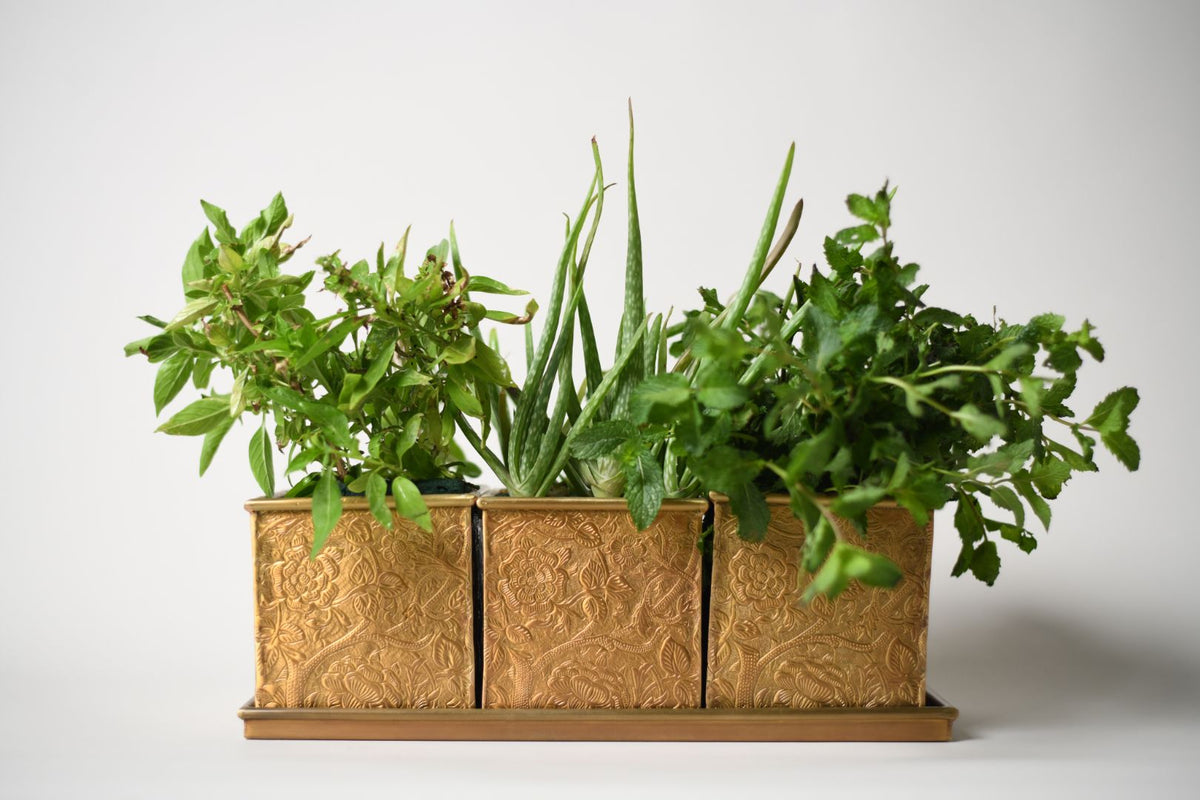
Brass planters stand apart from the rest because they don't just hold plants, they become a permanent fixture of your interior. Brass is non-porous, so it holds moisture well, making it suitable for a wide range of indoor plants. It's also genuinely durable: a well-maintained brass planter won't crack, chip, or degrade for decades. The warm gold tone complements both modern and traditional interiors, and as brass develops a natural patina over time, it actually becomes more characterful rather than less.
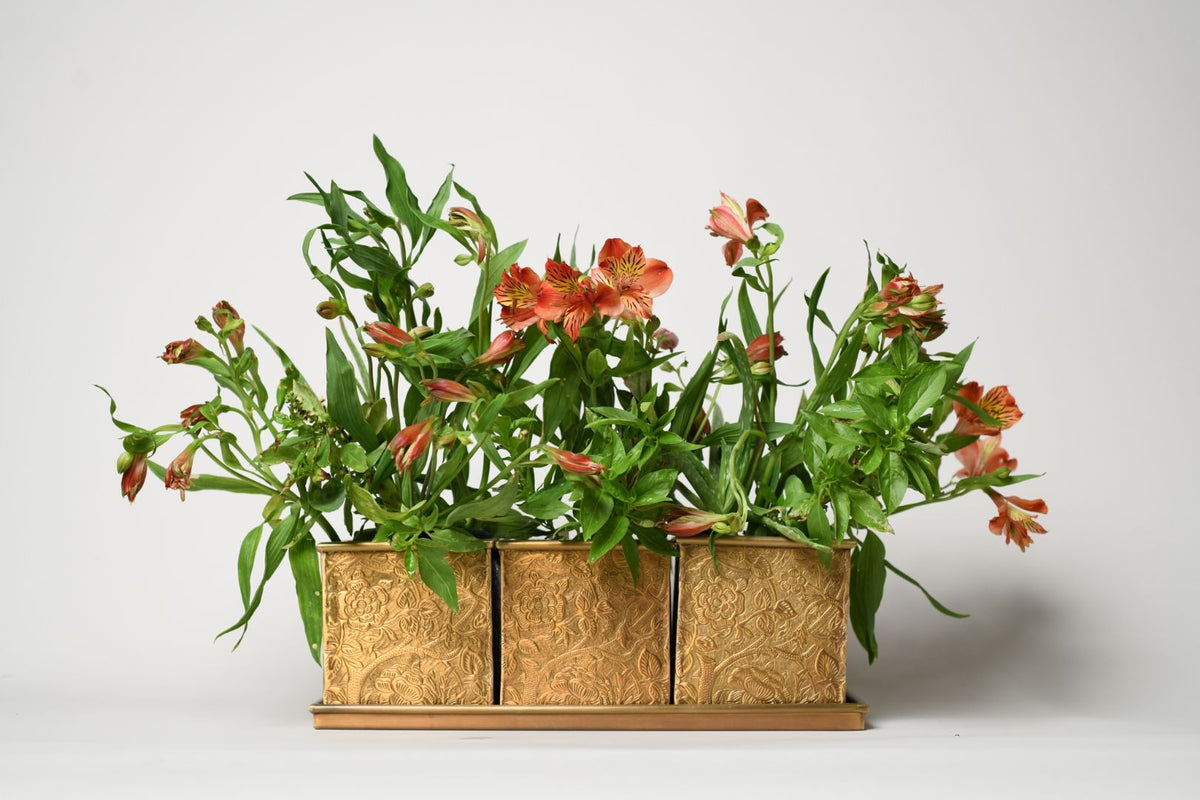
The only caveat with metal planters is drainage, most decorative brass pots don't have drainage holes, so understanding how to water correctly inside a metal vessel matters (which we cover in our care guide). A well-designed set like the Herb & Bloom Brass Planter Set is a strong example of how handcrafted metal planters combine functional design with lasting beauty, the kind of piece that looks better at year five than it does on day one.
Best for: Kitchen herbs, decorative houseplants, long-term interior display. Avoid for: Anyone who wants the cheapest short-term solution.
Concrete & Stone: Heavy-Duty and Modern
Concrete planters have surged in popularity with the rise of industrial and minimalist interiors. They're extremely durable, temperature-stable, and visually bold. However, they're also the heaviest option by far, and their alkaline nature can affect soil pH over time if the pot isn't sealed. They work best for large statement plants, fiddle leaf figs, palms, or oversized tropicals.
Best for: Large statement plants, modern and industrial interiors. Avoid for: Shelving, windowsills, or spaces where weight is a concern.
So, Which Material Should You Choose?
The honest answer depends on your plant, your space, and your approach to home décor. If you're furnishing a kitchen windowsill with herbs, want low maintenance, and care about aesthetics, brass or quality metal is the clear winner. If you're potting succulents on a sunny shelf, terracotta is hard to beat. If longevity and craftsmanship matter, metal planters offer an investment-grade option that plastic and ceramic simply can't match.
FAQs
Q: Can I use brass planters for all types of indoor plants? A: Yes, brass planters work well for most indoor plants including herbs, ferns, and tropicals. Since they're non-porous, they retain moisture longer, so adjust your watering frequency accordingly, particularly for drought-tolerant varieties like rosemary.
Q: Do metal planters rust? A: Brass doesn't rust, it oxidises to develop a patina, which is widely considered a mark of quality and character. However, low-quality metal-painted planters can rust if their coating chips. Always verify you're buying genuine brass or high-grade metal rather than a spray-painted substitute.
Q: Are heavier planters better? A: Not necessarily. Heavier materials like ceramic and concrete are more stable for large floor plants but impractical for shelving or windowsills. Brass offers a good balance, more substantial and premium-feeling than plastic, but far more manageable than concrete.
Q: How long does a brass planter last? A: With basic care, a genuine brass planter can last 20–50 years or more. Brass is inherently resistant to corrosion, and unlike painted or glazed pots, its finish doesn't peel or chip over time.

Written by Bhavini Khullar