
How to Care for a Brass or Metal Ikebana Vase
A brass or metal ikebana vase is not a delicate object. It is built to last. But "built to last" only holds true if you are not working against the material. Wrong cleaning products, standing water, and skipped maintenance will degrade a metal finish faster than daily use ever would.
This guide covers exactly what to do, and what not to do, so your vase looks the same in ten years as it did when you got it.
Know Your Finish Before You Clean Anything
This is the step most people skip, and it causes the most damage.
Brushed brass has a matte, directional texture created by fine abrasion during finishing. Cleaning against that grain scratches it visibly. You always clean brushed brass in the direction of the grain, the same way you would wipe a brushed stainless steel appliance.
Polished brass is smooth and reflective. It shows fingerprints and water spots clearly. It needs more frequent light wiping but tolerates cleaning in any direction.
Chrome is the most forgiving finish day to day, but it reacts badly to acidic cleaners. Even mild acids like vinegar or lemon juice will dull chrome over time.
Identify your finish once. Everything after that becomes straightforward.
After Every Use: Two Minutes of Attention
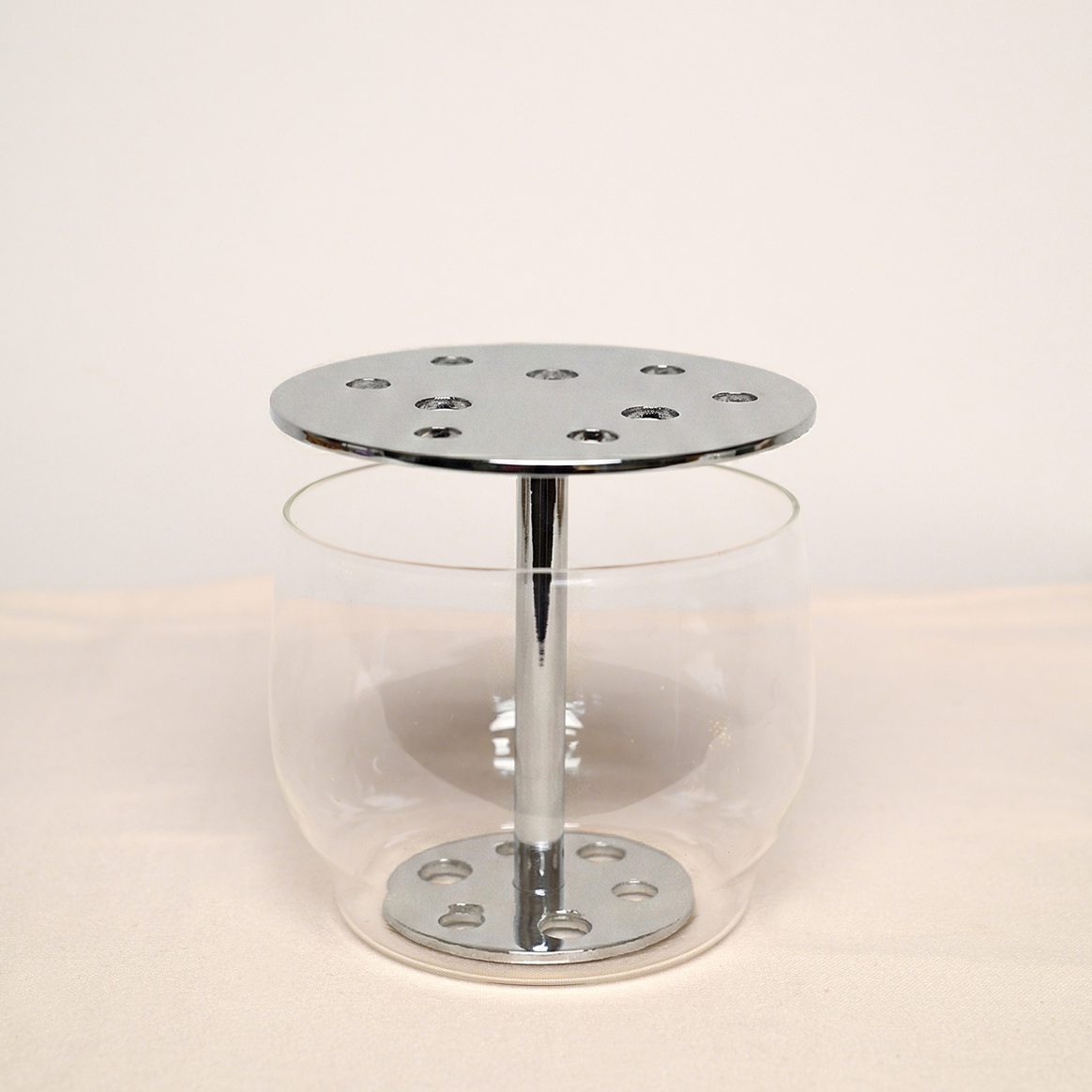
Empty the glass vessel of water after each arrangement ends. Do not leave standing water sitting inside against the metal base or kenzan. Over time, mineral deposits from tap water build up on the metal and are much harder to remove than they are to prevent.
Wipe the exterior of the metal with a dry microfibre cloth. This removes fingerprints and any water that splashed during arranging.
Rinse the kenzan under cool running water to clear plant debris from between the spikes. Dry it with a cloth or paper towel before leaving it. A wet kenzan left to air dry repeatedly will develop surface rust at the spike tips.
Weekly Cleaning for Brass
Mix a small amount of mild dish soap in warm water. Dampen a soft cloth, wring it out so it is damp but not dripping, and wipe the brass surface in the direction of the grain for brushed finishes.
Follow with a second cloth dampened in clean plain water to remove any soap residue.
Dry immediately and completely. Do not let water air dry on brass. Tap water contains minerals that leave white deposits when the water evaporates.
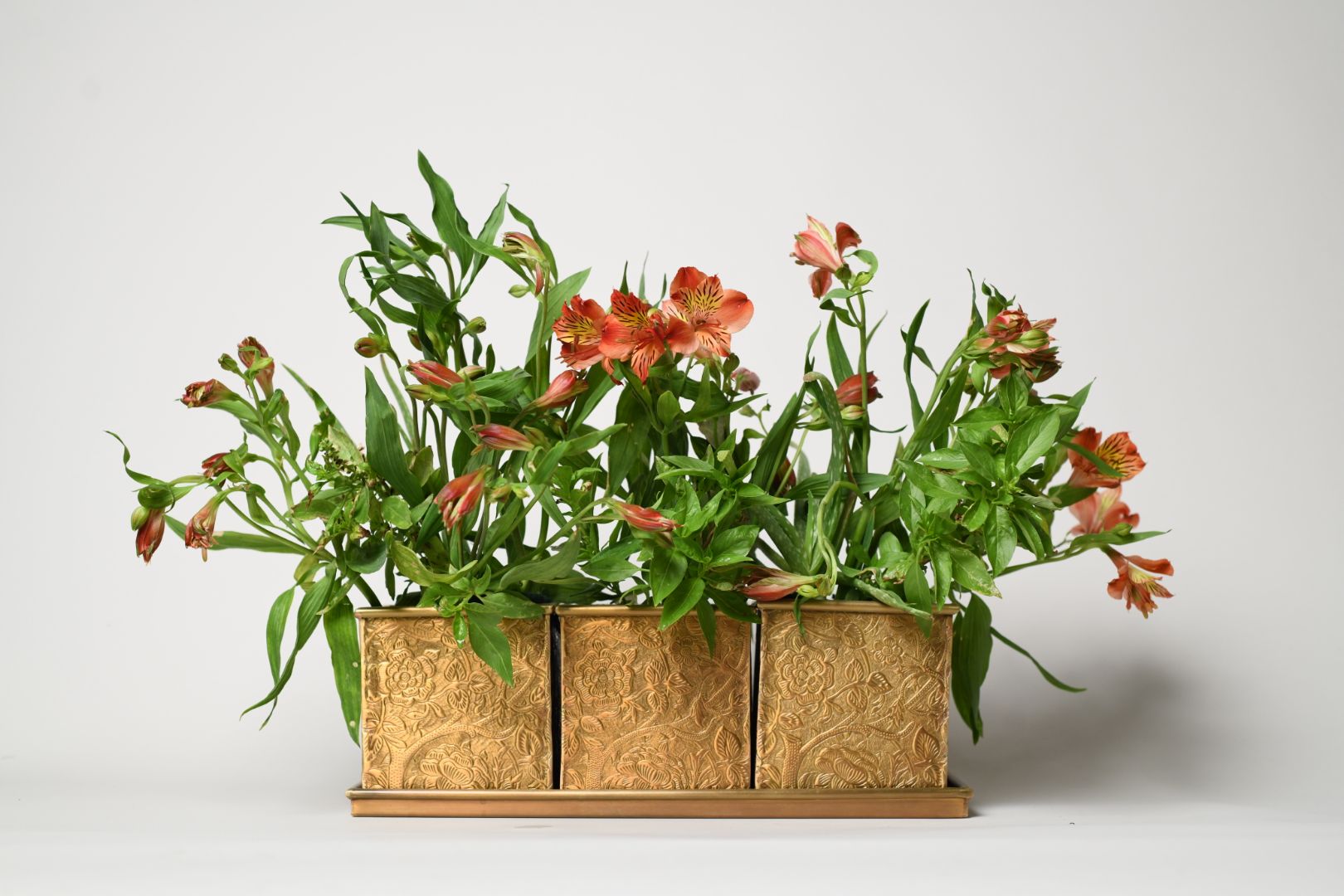
What not to use: vinegar, lemon juice, baking soda, salt, or any abrasive cleaner. These are frequently recommended online as natural cleaning solutions. On raw brass they can work. On a finished, treated brass surface like the BYAAS Anaar Bloom, they strip the protective coating and permanently alter the finish.
Weekly Cleaning for Chrome
Warm water and a drop of dish soap on a soft cloth is enough for chrome in regular use.
Dry immediately. Chrome shows water spots more readily than brass.
Once a week, after drying, apply a single drop of mineral oil to a clean cloth and buff it across the chrome surface. This restores a subtle, even shine and creates a light barrier against fingerprints. It takes thirty seconds and makes a visible difference.
Never use steel wool, rough sponges, or bleach-based cleaners on chrome.
When Brass Tarnishes
Brass oxidises naturally over time. It deepens in colour and develops darker areas, especially where hands touch it regularly. This is not damage. It is the material behaving the way brass has always behaved, and many people prefer the warmer, aged look it develops.
If you want to restore the original finish, use a dedicated brass polish such as Brasso. Apply a small amount with a soft cloth, work it in the direction of the grain, and buff clean with a dry cloth. Do this once or twice a year at most. Over-polishing removes the surface treatment applied during manufacturing.
What to Never Do
Never put a metal vase in the dishwasher. The combination of high heat, harsh detergent, and prolonged moisture exposure will ruin any metal finish permanently.
Never leave flowers with rapidly acidifying water, like roses in warm conditions, sitting in contact with the metal base for several days without changing the water.
Never use bathroom sprays, multi-surface cleaners, or anything containing bleach. These products are formulated for tiles and ceramic, not metal.
Never store the vase damp. Moisture trapped in a cupboard causes more damage than regular use.
Long-Term Storage
If you are not using the vase for an extended period, clean and dry it fully first. Wrap it loosely in a soft cloth. Do not use plastic wrap or sealed bags, which trap moisture against the surface.
Clean, dry, and apply a thin wipe of food-grade mineral oil to the kenzan spikes before storing. This prevents surface rust from forming while it sits unused.
A Vase That Is Cared For Lasts Generations
What you do after it arrives determines whether it stays that way. Two minutes after each use, a gentle clean once a week, and none of the products listed above. That is the full commitment. In return, you get a piece that does not degrade, does not date, and does not need replacing.
That is what a heirloom object is supposed to be.

Written by Bhavini Khullar