
How to Use an Ikebana Vase: A Beginner's Guide That Actually Makes Sense
An ikebana vase looks simple. A low vessel, a metal disc at the bottom, some water. But if you have never used one before, your first arrangement probably did not go the way you expected. Stems fell over. The whole thing looked unfinished. You added more flowers and it still looked wrong.
This guide fixes that. No philosophy degree required.
First, Understand the Two Parts
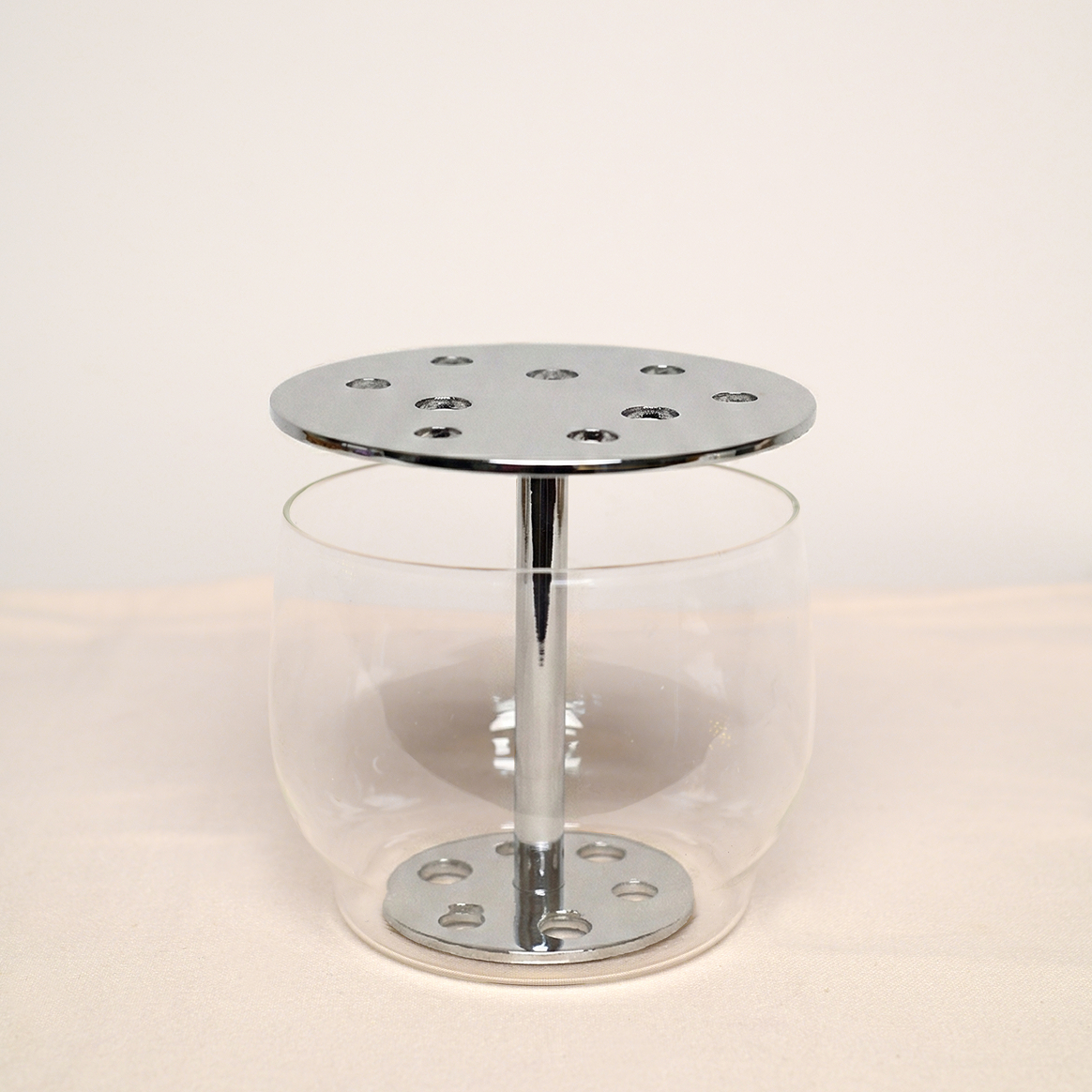
Every ikebana vase has two components. The vessel holds water. The kenzan, the metal spike disc sitting inside it, holds your stems. The kenzan is not decoration. It is the entire point. Without it, you are just putting flowers in a bowl.
The BYAAS Anaar Bloom uses a clear glass vessel so you can see the kenzan and the water level at all times. This matters more than it sounds. You can see exactly where stems are placed and how deep the water sits, which helps you manage both the arrangement and the flower's lifespan.
What You Need Before You Start
Sharp scissors or floral shears. Not kitchen scissors. Kitchen scissors crush the stem end and reduce water uptake. Sharp shears give you a clean cut that keeps flowers alive longer.
Clean water. Flowers sitting in vases. A soft cloth for wiping down the metal after. That is the full list. No floral foam, no wire, no tape.
The Core Principle: Every Stem Has a Reason
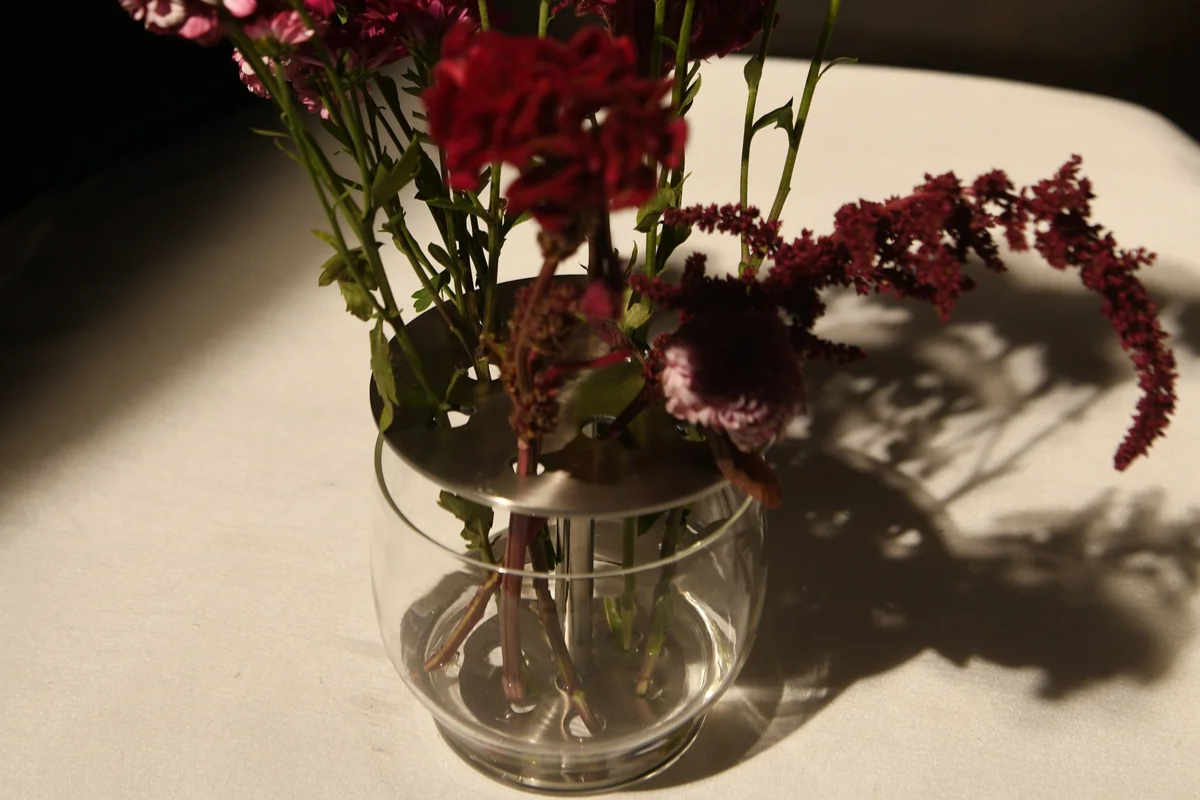
Ikebana is not about filling a vessel until it looks full. It is about placing each stem deliberately and stopping when the composition is complete. Three stems is a finished arrangement. Adding a fourth does not improve it.
The traditional framework uses three stems representing Heaven (the tallest), Man (the middle), and Earth (the shortest and most horizontal). You do not need to follow this rigidly as a beginner, but understanding it helps you resist the instinct to keep adding.
Step by Step: Your First Arrangement
Fill the glass vessel with clean water until it covers the kenzan completely. Covering the kenzan keeps the spike tips submerged, which protects them from rust over time.
Take your tallest stem, a branch, a large leaf, or a single long-stemmed flower. Cut the base at a 45-degree angle. This increases the surface area for water uptake. Press it firmly and straight down into the kenzan, then tilt it slightly to the angle you want. Pressing straight first, then tilting, is the technique. Trying to insert a stem already at an angle often bends or misses the spikes.
Take your shortest stem next. This one should sit low and lean outward almost horizontally over the edge of the vessel. It creates the grounding line of the composition.
Add your middle stem last. Place it between the two, filling the visual space without crowding it.
Step back. Look at the negative space between the stems. That open air is as important as the stems themselves. If it feels complete, stop. If it feels empty in one specific spot, add one stem to address exactly that spot and stop again.
What Works Best in an Ikebana Vase
Woody stems and branches hold angles extremely well because they are rigid. Eucalyptus, cherry blossom branches, monstera leaves, and dried pampas all work beautifully. Soft-stemmed flowers like tulips and ranunculus work too but need to be handled carefully on the kenzan because they are more fragile at the base.
Avoid very thin stems on their own. They tend to slip between spike gaps. Pair thin stems with a structural element, like a branch, that anchors the composition.
Common Mistakes
If a stem will not hold its angle, pull it out, recut the base slightly shorter, and re-insert straight down before tilting. A fresh cut gives a better grip on the spikes.
If the arrangement looks too busy, remove one stem. The most common beginner mistake is adding more when the answer is taking away.
If the water goes cloudy within a day, change it. Cloudy water means bacterial growth, which shortens the life of your flowers significantly.
After Your Arrangement
Once the flowers are finished, remove all stems from the kenzan. Rinse it under cool running water and use a stiff brush or old toothbrush to clear any plant material caught between the spikes. Dry it fully before the next use. A wet kenzan left sitting will develop rust at the spike tips, which damages both the kenzan and future stems.
This takes two minutes. It keeps your vase working properly for years.
You Do Not Need to Study Ikebana to Use This Vase
Formal ikebana practice takes years to develop. The vase does not require that commitment. Three stems, clean water, and five minutes of considered attention will produce an arrangement that looks deliberate and calm rather than thrown together.
That is the whole point.

Written by Bhavini Khullar